
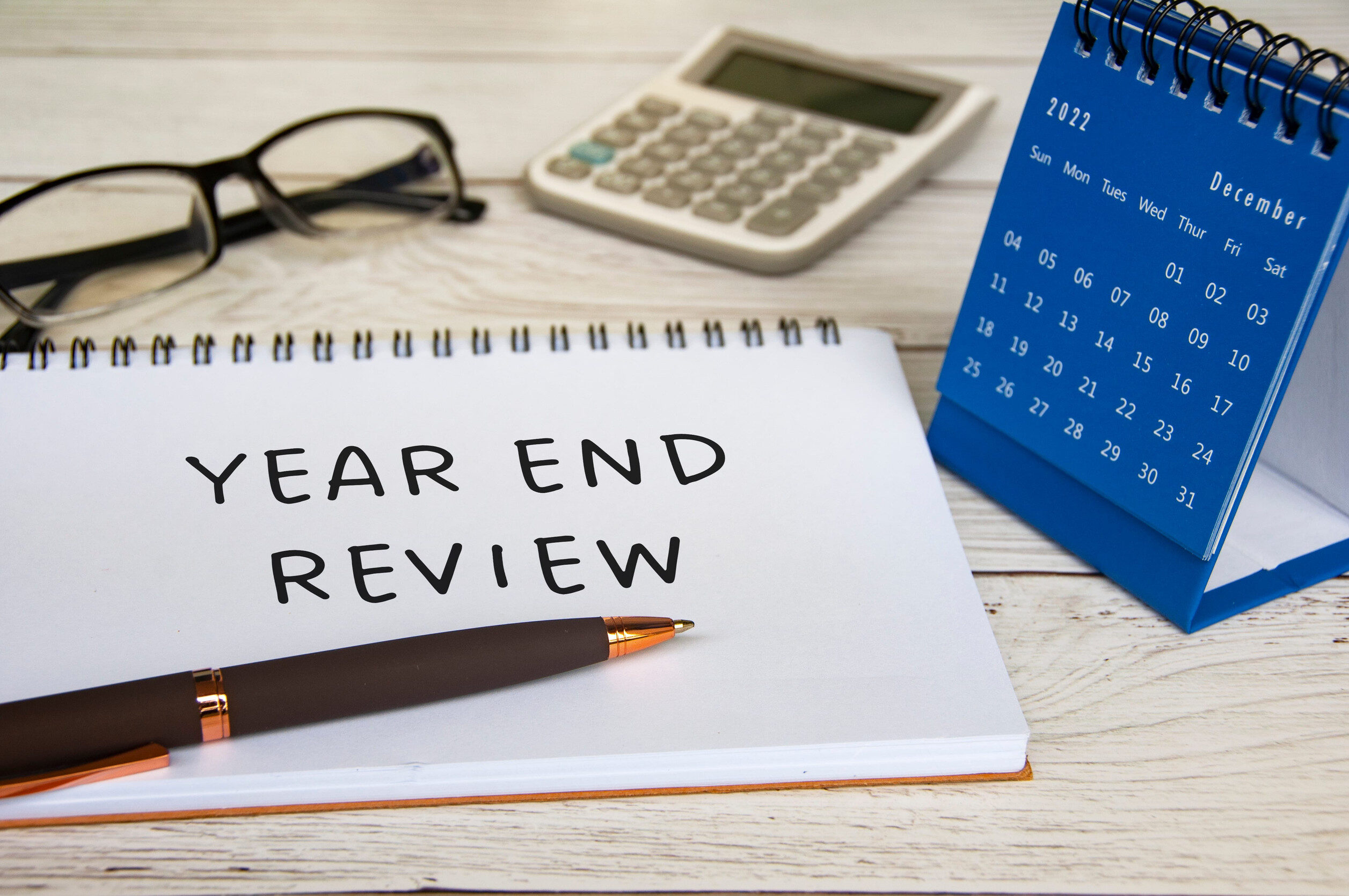
Ultimate Year-End Financial Planning: 10 Essential Moves
The end of the year arrives quickly.
Additionally, holiday plans, family gatherings, and travel compete for attention.
A year end financial planning review can keep financial decisions from slipping into January.
But some opportunities and deadlines do not wait for the new year.
That makes November and December a useful time for a year end financial planning review.
Additionally, a thoughtful review helps you understand what changed during the year.
It also identifies financial tasks that still need attention, and it ensures your strategy stays aligned with long-term goals.
You do not need to overhaul your entire financial life before December 31.
Additionally, use this year-end financial checklist to focus on areas that may deserve a closer look before the calendar changes.
Review the Financial Goals You Set This Year
Review the financial goals you set this year to see what you achieved and where you can improve. Reflect on savings targets, debt reduction, and investment milestones. Use this year’s results to guide your year end financial planning review and set clear priorities for the next year.
Begin by looking back before you look forward.
What were your major financial goals at the beginning of the year? Perhaps you wanted to increase retirement savings. Additionally, you aimed to pay down debt. Build an emergency fund, prepare for retirement, make a major purchase, or become more intentional about investing.
Ask yourself:
- Which goals did I accomplish?
- Where did I make progress?
- Which goals are still important?
- Did my priorities change?
- Did my income or expenses change significantly?
- Did a major life event affect my financial plans?
What made sense as a goal in January may not be your highest priority today.
Marriage, divorce, retirement, a job change, an inheritance, the purchase or sale of a home, or changes within your family can all affect your financial priorities.
The purpose of a year-end review is not to judge whether you checked every box. Therefore, the goal is to ensure your plan still reflects the life you are actually living.
2. Complete a Retirement Planning Checklist
Retirement savings deserve special attention before year-end.
Moreover, some retirement-plan contributions operate on calendar-year deadlines.
First, review the retirement accounts you have. These accounts may include different options.
- 401(k) or 403(b) plans
- Governmental retirement plans
- Traditional IRAs
- Roth IRAs
- SIMPLE or SEP plans
- Other employer-sponsored retirement accounts
Look at how much you have contributed so far. Furthermore, you should determine whether your current contribution level still supports your long-term retirement strategy.
Additionally, if your employer offers matching contributions, review whether you are taking advantage of the match available under your plan.
Annual retirement contribution limits can change, and different accounts may have different rules. However, verify the current limits that apply to your situation.
Your retirement planning checklist should also consider more than contribution amounts.
Additionally, review whether your savings rate remains aligned with your goals.
Also review your retirement timeline, investment allocation, and expected income sources for alignment.
3. Conduct a Year-End Investment Review
Additionally, a lot can happen in the markets over 12 months.
Even if you made no changes to your portfolio, market performance may have changed the percentage of your money invested in stocks, bonds, cash, or other assets.
A year-end investment review can help you determine if your portfolio still reflects your intended strategy.
Additionally, it confirms whether any adjustments are needed to stay on track with your goals.
Consider:
- Has my asset allocation changed significantly?
- Is my portfolio still appropriately diversified?
- Does my investment strategy reflect my current goals?
- Has my retirement timeline changed?
- Has my comfort with risk changed?
- Am I overly concentrated in one company, industry, or investment type?
- Do accounts held in different places work together as one portfolio?
However, the purpose is not to react to every market headline.
Instead, focus on whether your investments remain appropriate for your goals.
Additionally, consider financial circumstances, timeline, and tolerance for risk.
4. Decide Whether Your Portfolio Needs Rebalancing
Rebalancing is related to an investment review.
However, it serves a specific purpose.
Therefore, over time, certain investments may grow faster than others, causing your portfolio to drift from its intended allocation.
For example, if stocks perform well, they may represent a larger portion of your portfolio. Consequently, this shift can change the overall level of risk you are taking.
Additionally, rebalancing may involve adjusting holdings or directing new contributions toward areas that have become underrepresented.
It does not mean changing investments simply because one area of the market had a good year. However, it does not mean changing investments simply because another area had a bad year.
Before making changes, consider potential transaction costs and tax consequences. Also assess how the decision fits into your broader financial planning strategy.
5. Review Your Tax Situation Before December 31
Tax preparation usually happens after the year ends. Additionally, tax planning often needs to happen before it does.
However, that distinction matters.
Your year-end review may include looking at several areas. Additionally, it assesses progress and priorities for next year.
- Income changes
- Federal and state withholding
- Estimated tax payments
- Investment gains and losses
- Retirement distributions
- Charitable giving
- Major financial transactions
- Business or self-employment income
- Significant life changes
If you sold investments, changed jobs, retired, started a business, or received a bonus, your tax picture may look different.
Additionally, inherited assets, or another significant change, can also affect last year’s tax picture.
A financial professional can help identify how tax considerations connect with your broader plan.
Moreover, a qualified tax professional can provide individualized tax guidance.
Additionally, coordination can be particularly useful when year-end financial decisions affect multiple parts of your finances.
6. Check Required Retirement Distributions
For individuals subject to required minimum distributions, commonly called RMDs, year-end deadlines can be important.
Additionally, they affect planning for withdrawals and taxes.
The rules regarding when distributions begin, how they are calculated, and which accounts are affected can change over time.
Additionally, if RMD rules apply to you, review them.
- Which accounts require distributions
- Whether the correct amount has been withdrawn
- The applicable deadline
- How distributions may affect your taxable income
- How the distribution fits into your overall retirement income strategy
Avoid relying on an old assumption about RMD rules. Additionally, current regulations and your individual circumstances should guide the decision.
7. Review Beneficiaries and Legacy Priorities
A year-end financial checklist should include more than investments and taxes.
Take a few minutes to review beneficiary designations on financial accounts such as:
- IRAs
- Employer retirement plans
- Life insurance policies
- Annuities
- Certain bank and investment accounts
Life can change much faster than beneficiary forms do.
Marriage, divorce, remarriage, a birth, a death in the family, or changing relationships may affect whom you want to receive certain assets.
Year-end can also be a useful time to revisit broader legacy goals.
Do you want to leave assets to children or grandchildren? Support charitable organizations? Preserve a family property? Coordinate your financial accounts with an existing estate plan?
Financial professionals, estate planning attorneys, and tax professionals have different roles, but coordinating those areas can help make sure the pieces of your plan support the same goals.
8. Consider Charitable Giving Before Year-End
For people who regularly support charitable organizations, year-end is a natural time to review giving goals.
Start with the purpose behind the gift.
Which organizations or causes matter to you? Is charitable giving part of your annual budget, estate strategy, or broader legacy plan?
There are multiple ways to give, and different approaches can have different financial and tax implications.
Depending on your situation, charitable giving may involve cash, appreciated assets, qualified charitable distributions, donor-advised arrangements, or other strategies.
Not every option is appropriate for every person, and tax rules can be complex. Discuss significant charitable strategies with the appropriate financial and tax professionals before acting.
The key is to make charitable decisions intentionally rather than rushing to complete them during the final days of December.
9. Look at Your Cash Reserves and Upcoming Expenses
Year-end is also a good time to review your short-term financial position.
How much cash do you have available for emergencies and planned expenses?
Consider what may be coming during the next 12 months:
- Home repairs or improvements
- Vehicle replacement
- Travel
- Healthcare expenses
- Insurance premiums
- Property taxes
- College expenses
- Major family events
- Large purchases
If you own a home, cabin, rental property, or other real estate, include upcoming maintenance and property expenses in your planning.
The goal is to avoid having predictable expenses become financial surprises.
Your ideal cash reserve will depend on your household, income stability, expenses, and overall financial situation. Year-end provides a convenient opportunity to determine whether the amount you have available still feels appropriate.
10. Create Your Financial Priorities for Next Year
The final step in year-end financial planning is looking ahead.
You do not need a long list of financial resolutions. A few specific priorities may be much more useful.
Possible goals could include:
- Increasing retirement contributions
- Paying down a particular debt
- Building emergency savings
- Updating beneficiary designations
- Reviewing Social Security options
- Preparing for retirement
- Reassessing your investment allocation
- Coordinating estate and legacy planning
- Saving for a major purchase
- Creating a retirement income plan
Try to make each priority specific enough that you can measure progress.
Instead of saying, “I want to save more,” decide which account you want to fund. Then determine how much you hope to contribute.
Additionally, instead of saying, “I should think about retirement,” identify the questions you need answered.
Additionally, clear priorities can make financial planning feel much more manageable.
Which Year-End Money Moves Need to Happen Now?
However, not every financial task has a December 31 deadline.
However, that is an important distinction when reviewing potential year-end money moves.
Some retirement-plan contributions, required distributions, charitable strategies, and tax-related transactions may be tied to the calendar year.
Additionally, other financial decisions may be tied to the calendar year.
Other tasks can be completed later.
First, separate your list into three categories.
Needs Attention Before Year-End
These are items with deadlines or decisions that could affect the current tax.
Additionally, they could influence the calendar year.
Additionally, Should Be Reviewed Soon
However, these are important planning items that may not have a hard December deadline but deserve attention.
Priorities for Next Year
Additionally, these are longer-term goals that you can begin addressing after January 1.
This approach keeps a long checklist from becoming overwhelming. Moreover, it helps you focus first on decisions where timing actually matters.
Make Year-End Financial Planning Part of the Bigger Picture
Moreover, a good year-end review is not about making as many financial moves as possible before December 31.
Additionally, it is about understanding where you stand.
Your retirement savings, investments, taxes, beneficiaries, cash reserves, legacy goals, and future priorities are interconnected. Moreover, a decision in one area can sometimes affect several others.
That is why the most useful year end financial planning review looks at the whole financial picture. Additionally, it does not treat each account or decision separately.
Some years may require significant changes. Consequently, Other years, your review may simply confirm that your existing strategy remains appropriate.
Additionally, either outcome can be valuable.
As we begin the new year, the goal is a clearer understanding of your finances. Moreover, it clarifies the decisions that still require attention and the priorities your financial plan should support.
Contact Us
Lakes Financial Services provides personalized financial planning.
Additionally, it offers investment guidance for individuals and families in the Brainerd Lakes Area and beyond.
Areas of focus include retirement planning and strategies, investment and portfolio management, Social Security and retirement income, annuities.
Additionally, estate and legacy planning considerations, beneficiary planning, charitable giving strategies, and personalized wealth management.
For individuals reviewing their financial picture, Lakes Financial Services can serve as a resource.
Additionally, it helps explain how these different areas may fit into a broader financial strategy.
Lakes Financial Services601 NW 5th Street, Suite 5Brainerd, MN 56401
Phone: (218) 828-8336. Additionally, Email: inbox@lakesfinancialservices.com.